

Message
Message from President
Toward the Establishment of Sustainable Health Security
—Realizing a Resilient and Secure Society through the Power of Science—

April 1, 2026
Norihiro Kokudo, MD, PhD, FACS, FRCS
President,Japan Institute for Health Security (JIHS)
On April 1, 2025, the Japan Institute for Health Security (JIHS) was established through the merger of the National Institute of Infectious Diseases (NIID) and the National Center for Global Health and Medicine (NCGM), bearing a historic responsibility to fundamentally strengthen Japan’s health security. Guided by the many lessons learned from Japan’s response to the COVID 19 pandemic, JIHS is committed to advancing as a new hub of knowledge that consistently safeguards the lives and health of the people of Japan, both in ordinary times and when health security threats emerge.
An Integrated Science Center for Infectious Diseases
Where More Than 130 Years of History Converge
The establishment of JIHS was by no means sudden. Its intellectual and spiritual origins can be traced back more than 130 years to Berlin, where two eminent physicians once studied together. One was Shibasaburō Kitasato, a pioneering microbiologist who established the pure cultivation of the tetanus bacillus and laid the foundations of serum therapy. The other was Rintarō Mori—widely known by his pen name Mori Ōgai—who, as Surgeon General of the Imperial Japanese Army, made enduring contributions to public health. Both figures, deeply connected to the legacies of NIID and NCGM respectively, once trained under Robert Koch. That shared heritage has now culminated in the formation of JIHS as a single, integrated institution.
Over the past year, while continuing the extensive responsibilities of our predecessor organizations, we have steadily laid the foundations for JIHS as a new entity. As we enter our second year, we seek to respect the organizational cultures, achievements, and long histories cultivated by both institutions, while advancing their genuine integration. Through this process, we aim to generate synergistic effects in which “one plus one” yields more than two. Our vision is to serve as Japan’s Integrated Science Center for Infectious Diseases, leading the world in infectious disease countermeasures as a core pillar of national and global health security, by comprehensively integrating basic research, clinical medicine, epidemiology, public health, and the social sciences.
Four Core Functions
JIHS carries out its mission through four core functional pillars, supported by multidisciplinary expertise and advanced facilities.
1. Information Collection, Analysis, and Risk Assessment
JIHS serves as an intelligence hub for infectious diseases, conducting rapid surveillance and information collection and analysis, while fostering collaboration with relevant domestic and international partners. Based on scientific evidence, the Institute provides timely recommendations to the government and delivers clear and accessible information to the public as part of its contribution to health security.
2. Research, Development, and Innovation
JIHS aims to maintain a world class research environment capable of strategically advancing research across the full spectrum—from basic science and the development of seeds for medical countermeasures to clinical trials. In the event of infectious disease threats, JIHS will collaborate closely with domestic and international organizations and swiftly function as a hub for research and development through a robust global network, contributing to rapid and effective health security responses.
3. Advanced Clinical Care
Advanced clinical capabilities are essential to addressing health security threats. JIHS will maintain and further enhance NCGM’s comprehensive general hospital functions, including the National Center for Global Health and Medicine and the National Kohnodai Medical Center, ensuring that state of the art medical care can be continuously delivered to protect people’s health, even during periods of heightened health security risk.
4. Human Resource Development and International Cooperation
Through the National College of Nursing, Japan, the Field Epidemiology Training Program (FETP), and other initiatives, JIHS strives to develop and secure professionals across diverse fields, including healthcare practitioners, researchers, and public health responders. In parallel, JIHS promotes international cooperation and global partnerships that contribute to the advancement of global health security.
Toward the Realization of a Resilient Society
Centered on the headquarters campus in Toyama, Shinjuku, seven operational centers—including two hospitals, two research institutes, a clinical research center, the Bureau of Global Health Cooperation, and the National College of Nursing—together with five administrative divisions and the Disaster Medical Assistance Team (DMAT) Secretariat, work in close and organic coordination. Through this integrated structure, JIHS has established a flexible yet robust health security framework capable of addressing a wide spectrum of health security threats, with infectious diseases at its core.
With the mission “to contribute to the creation of a resilient and secure society through the implementation of research and development on infectious and other diseases, as well as the provision of medical care” firmly at its core, JIHS will continue to respond to the evolving needs of society. All members of the Institute share this responsibility and remain fully committed to advancing our efforts toward a resilient and secure future. We respectfully ask for the continued understanding, support, and cooperation of the public and all partner organizations.
Message from Vice President
Striving for a more flexible and resilient response to health crises
- Expectation for the JIHS to advance the development of a comprehensive medical institute upon the establishment of the National Institute of Health -
April 1, 2026
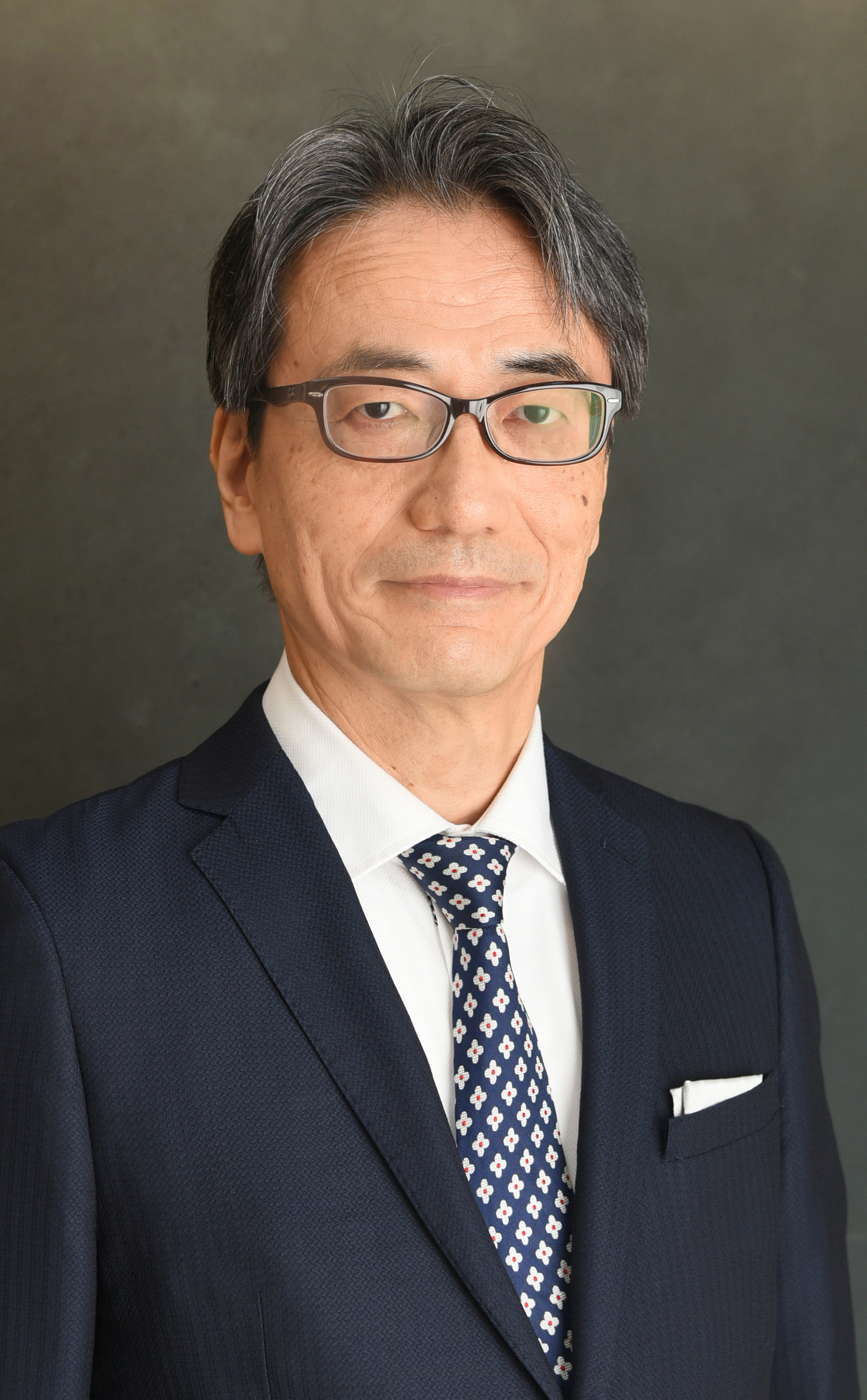
Takaji Wakita, MD, PhD
Vice President,Japan Institute for Health Security (JIHS)
The Japan Institute for Health Security (JIHS) marked the first anniversary of its establishment in April 2026. Since its launch in April 2025, JIHS has advanced efforts to build a new organizational framework that enables the integrated operation of diverse functions—including research, clinical care, epidemiology, public health response, human resource development, and international cooperation—following the merger of the National Institute of Infectious Diseases (NIID) and the National Center for Global Health and Medicine (NCGM).
The initial year of operations was a critical period for laying the institutional foundations of JIHS, while also fostering mutual understanding between two organizations with distinct histories, cultures, and areas of expertise. As we enter our second year, we now seek to build upon these accumulated efforts and steadily advance toward a more effective, integrated, and agile health security framework.
A defining strength of JIHS lies in its capacity to address the entire continuum of health security, encompassing basic research, clinical practice, surveillance, public health measures, and international engagement, in an integrated manner. To fully realize this potential, it is essential not only to enhance each function individually, but also to strengthen their linkage across disciplinary boundaries. By rapidly translating scientific findings into clinical practice and policy, systematically feeding insights from frontline settings back into research, and appropriately reflecting surveillance data in decision‑making, JIHS aims to reinforce seamless response capabilities across all phases of health security, from preparedness to emergency situations.
In particular, the strengthening of research and development functions remains a high priority. From my own experience in infectious disease research, I am keenly aware of the persistent challenges involved in translating outcomes from basic research into clinical application and the development of medical countermeasures. At JIHS, we must address this challenge by establishing an integrated framework that advances efforts from basic research through to pharmaceutical and medical product development as a unified process contributing to health security.
JIHS will endeavor to transform promising scientific seeds generated through basic research into diagnostics, therapeutics, and vaccines as rapidly as possible, and to deliver them to the settings where they are most urgently needed. To this end, we will further promote collaboration with clinical divisions and private‑sector partners, and advance research and development with a clear focus on real‑world implementation and contribution to national and global health security.
I would also like to emphasize the importance of continuous communication with the public, particularly during non‑emergency periods. Even when addressing highly specialized scientific topics, maintaining clear, accurate, and accessible communication contributes to broader societal understanding of health security issues. Such cumulative efforts form the foundation of trust, ensuring that, in times of health security threats, essential information is effectively received and translated into appropriate action.
When infectious diseases or other health security threats arise, it is imperative to present timely, science‑based information and concrete preparedness measures in response to changing circumstances. However, without trust cultivated during ordinary times, such information may not be adequately conveyed. For this reason, JIHS places strong emphasis on routine information dissemination and two‑way communication with the public, steadily building understanding and trust as a core component of health security.
To support these activities, it is also necessary to lower internal barriers between disciplines and foster an organizational environment in which cross‑functional collaboration occurs naturally. By effectively integrating diverse forms of expertise, JIHS can enhance its capacity for practical, coordinated, and agile responses to health security challenges. Moreover, the role of JIHS extends beyond the organization itself.
Strengthening collaboration with domestic stakeholders—including local public health institutes, medical institutions, universities, the Ministry of Health, Labour and Welfare, and local governments—while actively engaging in international health security networks remains essential. By effectively leveraging these partnerships, JIHS will continue to strengthen preparedness and response capabilities for health security threats at both national and global levels.
JIHS is entrusted with the role of serving as Japan’s core institution for addressing infectious diseases and other health security threats. Building on the experiences gained during its first year of operations, the second year represents a phase in which the outcomes of integration must be translated into tangible capabilities. By realizing, in a contemporary form, the founding vision of a comprehensive medical research institute articulated at the inception of NIID, and by aspiring to lead world‑class infectious disease countermeasures as part of a broader health security agenda, JIHS seeks to contribute to the creation of a resilient and secure society. Together with all staff members, we will continue to advance this mission with steady and sustained efforts.